AI Voice Agents and the Evolution of Modern Lead Qualification
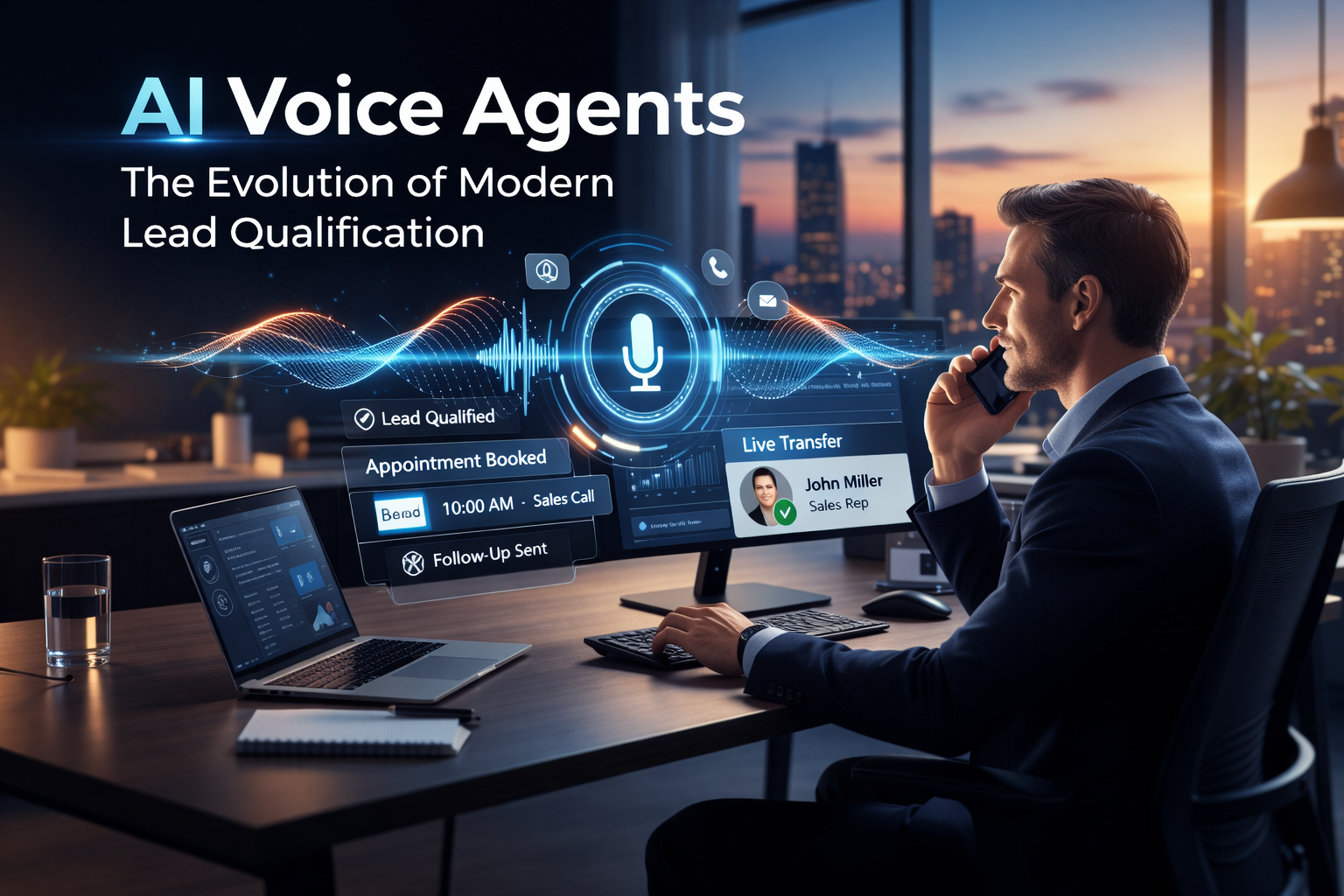
For decades, phone conversations have been one of the most effective conversion mechanisms in business. Voice communication builds trust faster than email, resolves objections in real time, and accelerates decision making. Despite this, many organizations struggle to operationalize phone-based engagement at scale. Missed calls, delayed responses, and inconsistent qualification processes quietly reduce revenue potential every day.
As markets become more competitive and customer expectations rise, response speed and conversational quality are no longer advantages. They are requirements. This shift has created space for a new category of growth infrastructure: AI voice agents designed specifically for lead qualification and appointment booking.
AI voice systems are not replacements for sales professionals. They are structured, scalable front-line systems that ensure every opportunity is captured, assessed, and routed correctly without delay. When implemented correctly, they transform phone engagement from a reactive activity into a predictable growth engine.
The Structural Weakness in Traditional Call Handling
Most organizations treat phone engagement as an operational function rather than a revenue function. Calls are handled when staff are available. Qualification depends on individual performance. Follow-up timing varies. The result is inconsistency.
This inconsistency has measurable consequences. Research across multiple industries shows that the likelihood of converting a lead decreases significantly as response time increases. The window of highest buying intent is short. When a prospect reaches out, they are actively evaluating options. Delays introduce friction and invite competition.
Human teams, regardless of skill, operate within constraints. Availability fluctuates. Volume spikes overwhelm capacity. After-hours inquiries go unanswered. Even high-performing sales teams cannot maintain perfect response coverage without disproportionate increases in headcount.
AI voice agents address this structural weakness by ensuring that response time, qualification flow, and booking procedures operate with precision and consistency.
What an AI Voice Agent Actually Does
An AI voice agent is a conversational system capable of engaging callers in natural dialogue, gathering relevant information, and executing predefined business actions based on that interaction. Unlike traditional interactive voice response systems that rely on rigid menus, modern AI voice agents interpret intent, ask contextual follow-up questions, and adapt to the direction of the conversation.
In the context of lead generation and qualification, these systems perform several critical functions. They answer inbound calls immediately, conduct structured qualification conversations, determine fit based on predefined criteria, book appointments directly into sales calendars, and route high-value opportunities to live representatives when necessary. They can also initiate outbound calls in response to form submissions or campaign engagement, reducing response time from hours to seconds.
The objective is not novelty. It is operational reliability.
Qualification as a Revenue Lever
Lead qualification is one of the most resource-intensive elements of the sales process. Sales representatives often spend substantial time engaging with prospects who lack budget, authority, or immediate need. While these conversations may provide insight, they dilute focus from high-intent opportunities.
AI voice agents introduce standardization into qualification. Each caller is guided through a consistent conversational framework designed to assess alignment with defined criteria. Budget range, timeline, decision-making authority, business size, and problem urgency can all be assessed systematically.
This structure does not eliminate nuance. It ensures that baseline qualification happens efficiently and that human sales professionals enter conversations with context rather than starting from zero. By the time a call is transferred or an appointment is booked, the essential data has already been collected and recorded.
The impact is measurable. Sales teams spend a higher percentage of their time on qualified conversations, close rates improve due to better alignment, and internal morale increases because effort is focused where it matters most.
Speed as a Competitive Advantage
Speed to lead has become one of the defining metrics in modern sales performance. Numerous industry studies demonstrate that contacting a lead within minutes significantly increases conversion probability compared to contacting the same lead hours later.
AI voice agents make near-instant response standard practice. When a prospect submits a form, the system can automatically place a call, introduce itself, confirm the reason for inquiry, and begin qualification immediately. This reduces the likelihood that the prospect continues evaluating competitors during a response delay.
The competitive advantage is not subtle. Organizations that respond within seconds consistently outperform those that respond within hours. As more businesses adopt faster systems, expectations shift upward. Companies that remain dependent on manual response workflows will find themselves at a growing disadvantage.
Appointment Booking Without Friction
Scheduling friction is an underestimated source of lost revenue. Traditional appointment setting often involves multiple exchanges, calendar coordination, and follow-up reminders. Each additional step introduces the possibility of disengagement.
AI voice agents integrate directly with calendar systems and present available time slots during the call. The prospect selects a preferred option, the meeting is scheduled instantly, and confirmation details are delivered automatically via email or text message. The entire process can occur within a single interaction.
This immediacy reinforces professionalism and reduces cognitive load for the prospect. It also increases show rates because the booking occurs at peak intent rather than after a series of delayed communications.
Consistency at Scale
Human performance varies. Even well-trained representatives differ in tone, questioning depth, and adherence to qualification structure. While variability can be positive in persuasive selling, it introduces inconsistency in early-stage filtering and scheduling.
AI voice agents execute conversations based on predefined logic every time. The qualification structure remains intact regardless of call volume or time of day. Objection handling scripts are delivered clearly and consistently. Escalation rules are followed precisely.
This consistency is particularly valuable for organizations operating across multiple regions or time zones. Standardization ensures brand alignment and operational clarity while still allowing human sales professionals to bring nuance to high-value conversations.
Data as a Strategic Asset
One of the most significant long-term advantages of AI voice implementation is structured data capture. Every interaction generates usable insights. Common objections, booking rates, qualification drop-off points, and frequently asked questions can all be analyzed systematically.
This data informs improvements in messaging, targeting, and campaign strategy. It also provides clarity into where prospects experience hesitation. Rather than relying on anecdotal feedback from sales teams, leadership gains measurable visibility into front-line performance.
Over time, this data becomes a strategic asset. Patterns emerge. Scripts evolve. Targeting sharpens. The system improves not only through refinement but through accumulated intelligence.
Extending Coverage Without Expanding Headcount
Scaling phone-based engagement traditionally requires hiring. Additional representatives increase payroll, training complexity, and management overhead. For many growing companies, this creates a tension between expanding marketing efforts and maintaining operational efficiency.
AI voice agents decouple growth from headcount expansion in early-stage interactions. They provide twenty-four-hour coverage without fatigue or scheduling constraints. Peak call volume does not degrade response speed. Seasonal demand spikes do not require emergency staffing.
Human representatives remain essential for high-stakes conversations and closing discussions. However, the repetitive front-line workload is absorbed by the system. This balance reduces operational cost per qualified appointment and allows sales teams to focus on revenue-generating activity rather than administrative coordination.
Addressing Perception and Trust
Skepticism around AI voice technology often centers on authenticity. Will prospects resist speaking to a system? Will the experience feel impersonal?
In practice, perception depends on execution. When the conversational flow is natural, the tone is professional, and escalation to a human is seamless, resistance declines significantly. Most prospects prioritize clarity and efficiency over the identity of the first point of contact.
Furthermore, AI voice agents can be positioned transparently as digital assistants designed to streamline scheduling and ensure fast service. Transparency builds trust. Efficiency reinforces it.
The objective is not to conceal automation but to use it intelligently.
Integration With Broader Growth Systems
AI voice agents are most powerful when integrated into a broader lead generation ecosystem. Cold email campaigns can trigger outbound qualification calls when a prospect replies positively. Paid advertising campaigns can connect directly to instant follow-up calls after form submission. Missed inbound calls can generate automatic call-backs within minutes.
This integration transforms isolated marketing activities into a coordinated system. Each channel feeds into the same qualification and booking infrastructure. Data flows into central CRM platforms. Performance metrics become unified.
When properly integrated, the voice layer strengthens both inbound and outbound strategies.
From Reactive Communication to Growth Infrastructure
Traditional phone engagement is reactive by design. Teams respond when calls arrive and follow up when time permits. AI voice agents convert this reactive posture into proactive infrastructure.
Form submissions trigger immediate contact. Warm leads receive timely check-ins. Unanswered calls generate structured follow-ups. Every interaction becomes part of a defined process rather than a discretionary action.
Infrastructure changes behavior. When response speed and qualification consistency become embedded in systems rather than dependent on individual effort, revenue becomes more predictable.
Long-Term Strategic Implications
The adoption of AI voice technology represents more than an operational upgrade. It signals a shift toward systemized growth. Organizations that invest early gain data advantages, operational efficiency, and cultural alignment around speed and accountability.
As conversational AI continues to improve, voice interactions will become increasingly fluid and context-aware. Companies that have already built structured frameworks will be positioned to integrate advancements seamlessly. Those that delay adoption will face steeper transitions later.
The long-term implication is clear. Conversational engagement will not disappear. It will become more intelligent and more integrated.
Conclusion
Phone conversations remain one of the highest-converting interactions in sales. The challenge has always been scalability and consistency. AI voice agents address both.
By ensuring immediate response, structured qualification, seamless booking, and comprehensive data capture, they convert phone engagement into a disciplined growth asset. Human sales professionals remain central to closing complex deals, but their time is protected and focused where it generates the highest return.
In a market where speed and clarity determine competitive positioning, relying solely on manual call handling is increasingly insufficient. Organizations that implement AI voice agents are not automating for novelty. They are building resilient infrastructure designed to capture opportunity without delay.
The future of sales is not a choice between human and machine. It is the strategic coordination of both.


