The Autonomous Pipeline: How to Build a Self-Sustaining Lead Generation Engine
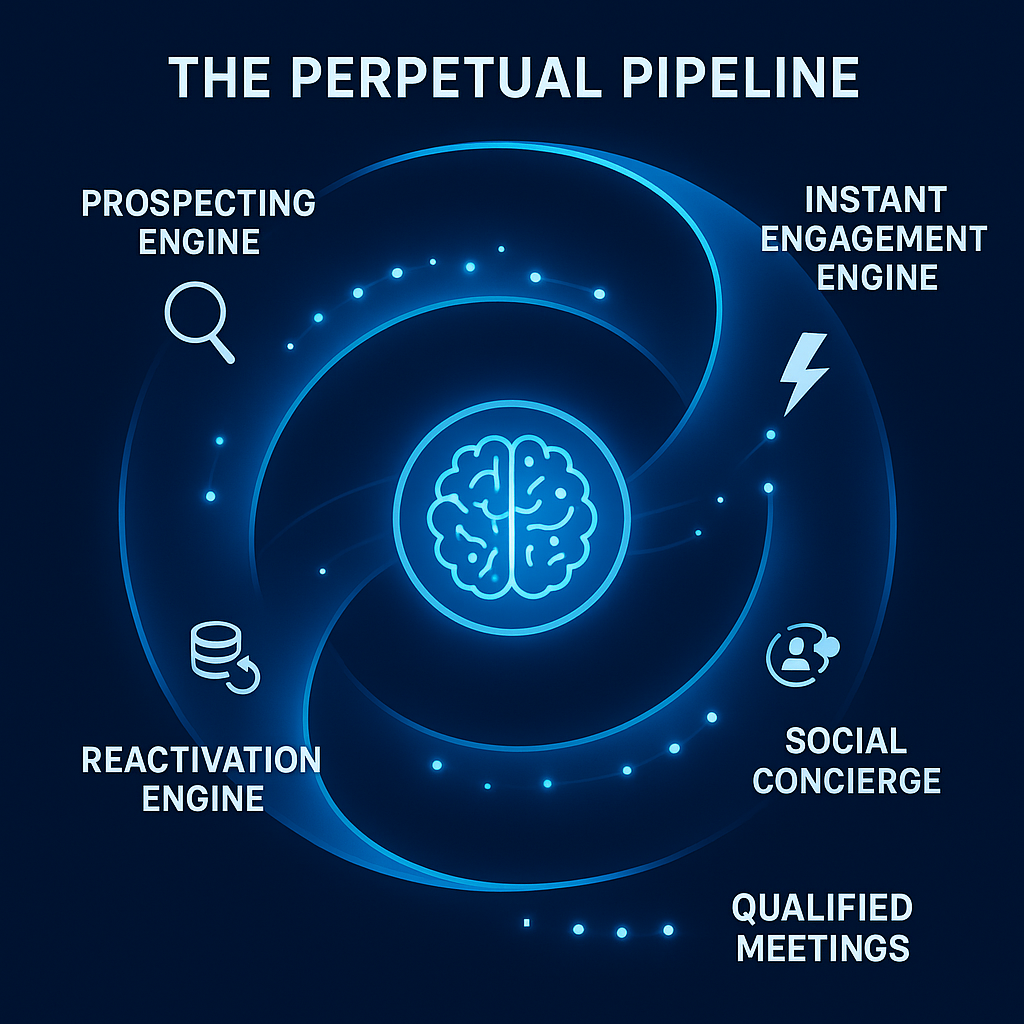
Imagine a sales pipeline that fills itself. Not in fits and starts, not through heroic efforts from a strained sales development team, but through a consistent, automated, and intelligent system that operates 24 hours a day, seven days a week. This is no longer a futuristic fantasy. It is the new reality for businesses that have moved beyond piecemeal automation and have embraced a fully autonomous lead generation strategy.
For years, companies have been sold on the promise of marketing automation. They implemented CRMs, email marketing platforms, and social schedulers. Yet, their sales teams still spend the majority of their time chasing, not closing. The problem was never a lack of tools, but a lack of integration and intelligence. These systems created more work, more data silos, and more unqualified leads.
The next evolution is here: the autonomous pipeline. This is not a single tool, but a seamlessly integrated system powered by artificial intelligence that handles the entire lifecycle of a lead, from first touch to final handoff. It represents a fundamental shift from human-led, tool-assisted processes to AI-led, human-supervised outcomes.
The Architecture of Autonomy: The Four Engines of Continuous Growth
Building a self-sustaining lead generation engine requires the synchronization of four core AI systems. When these systems work in concert, they create a perpetual motion machine for your sales pipeline.
1. The Prospecting and Outreach Engine: Intelligent Hunting at Scale
Traditional cold outreach is a numbers game with low success rates. An autonomous prospecting engine transforms this into a targeted, intelligent conversation.
This system begins with data. It analyzes your ideal customer profile and scours thousands of data points to identify companies that not only fit your demographic criteria but are also showing intent signals. These signals could include recent funding rounds, key hires, tech stack changes, or content consumption related to your solution.
Once targets are identified, the AI crafts hyper-personalized outreach. This goes beyond mail merge. It references specific company events, shared connections, or recent news. The system then manages a multi-channel sequence across email and social platforms. It sends the initial message, follows up based on nuanced engagement triggers, and even handles replies using natural language processing to maintain a conversational thread.
The engine learns and optimizes in real time. It continuously A/B tests subject lines, message copy, and sending times, automatically doubling down on what works and eliminating what does not. The result is a continuously improving outreach machine that books qualified meetings without any manual input.
2. The Instant Engagement Engine: Capturing Demand at the Speed of Thought
The greatest loss in sales is not a rejected proposal, it is a missed opportunity. Studies consistently show that response time is the single most critical factor in converting an inbound lead. Waiting even five minutes can decrease the likelihood of contact by 80 percent.
An autonomous instant engagement engine eliminates this delay. It acts as a high-speed response layer integrated with your website, landing pages, and digital ads. The moment a visitor submits a form or triggers a high-intent behavior, the system activates a multi-touch response sequence within seconds, not minutes or hours.
This sequence is not a single email. It is a synchronized campaign. A personalized confirmation email is sent immediately. A text message arrives on their phone. Most importantly, an AI-powered voice call is placed. This AI receptionist can answer questions, qualify the lead based on your criteria, and instantly book a meeting on a sales rep's calendar. This ensures that every expression of interest is met with immediate, professional engagement, capturing leads when their curiosity is at its peak.
3. The Social and Advertising Concierge: Qualifying Leads Within the Platform
Standard social media and pay-per-click campaigns are built for top-of-funnel awareness. They generate clicks, but they often fail to qualify those clicks effectively, dumping unvetted leads into your CRM.
An autonomous social and advertising concierge changes this dynamic. It uses AI to engage with users directly within platforms like LinkedIn, Facebook, and Instagram. When a user clicks on an ad or engages with your content, the AI can initiate a conversational chat. It can answer frequently asked questions, provide additional information, and, crucially, ask qualifying questions to gauge budget, authority, need, and timeline.
This means your advertising budget is not just generating awareness, it is generating pre-qualified conversations. The AI acts as a tireless, always-available social selling representative, ensuring that every ad dollar is spent on engaging with and qualifying potential customers before they ever reach your website, maximizing your return on investment and saving your team countless hours.
4. The Reactivation and Nurture Engine: Mining Dormant Gold
Most companies are sitting on an untapped asset: their existing CRM database. Past inquiries, disqualified leads, and former customers represent a low-cost, high-potential source of revenue.
An autonomous reactivation engine systematically mines this database. It segments contacts based on their past interactions, reason for disqualification, and potential for re-engagement. It then deploys personalized nurture campaigns designed to warm these contacts back up.
These campaigns are not generic newsletters. They deliver targeted content, new case studies, or updates on product features that are specifically relevant to that segment. The AI tracks engagement closely, identifying which contacts are showing renewed interest and escalating them back into the main sales pipeline. This process turns a static list of names into a flowing stream of warm, re-engaged prospects, often at a fraction of the cost of acquiring a new lead.
The Growtoro Autopilot: Engineering Your Custom Growth Machine
At Growtoro, we specialize in building and integrating these four engines into a single, cohesive Autopilot system. Our approach is not to sell a one-size-fits-all software license, but to engineer a custom solution tailored to your unique business needs.
Our process begins with a deep dive into your goals, your target market, and your existing tech stack. We then build and configure the AI systems that will power your autonomous pipeline.
Our core services include:
AI Powered Cold Email Outreach: We set up intelligent campaigns that find, target, and engage your ideal customers. This includes personalized message generation, smart sequencing, and continuous optimization, all running automatically.
AI Voice Solutions: We help businesses install, customize, and launch AI voice systems that book appointments, answer calls, and turn leads into revenue. From AI receptionists that provide 24/7 coverage to outbound callers that follow up on leads, we design solutions that work with the consistency of your best sales rep.
AI Driven Social and Ad Campaigns: We launch and manage campaigns on platforms like Facebook, Instagram, and LinkedIn that are designed to do more than attract clicks. They are designed to qualify leads automatically and initiate conversations, keeping prospects moving down the funnel without manual intervention.
The result is a fundamental transformation of your sales operations. Your team is liberated from the tedious, time-consuming work of prospecting and lead chasing. They can focus exclusively on what they do best: building relationships, navigating complex negotiations, and closing deals. The AI handles the rest, ensuring a consistent, predictable, and scalable flow of qualified opportunities.
Real World Impact: Case Studies in Autonomous Lead Generation
The theoretical benefits of autonomous lead generation become concrete when examining real world implementations. Companies across various industries are achieving remarkable results by deploying these AI powered systems.
Case Study 1: B2B Software Company Scales Outbound Operations
A mid-sized SaaS company selling workflow automation software struggled to scale their outbound efforts. Their two-person business development team was overwhelmed by manual prospecting and follow-up, limiting them to approximately 100 personalized outreaches per week.
After implementing an autonomous prospecting and outreach engine, the dynamic shifted dramatically. The AI system was tasked with identifying ideal customer profiles in the technology sector. It began processing intent data, identifying companies that were expanding their IT teams or discussing digital transformation initiatives.
The system then generated personalized emails referencing these specific triggers. One email to a CTO noted their company's recent job posting for a systems architect and connected it to how their software could streamline the new hire's onboarding process. This level of personalization at scale was previously impossible.
Within 90 days, the results were transformative. The company was now sending over 2,000 personalized emails per week. More importantly, the reply rate increased from 1.2% to 4.7%, and the meeting booking rate jumped from 0.3% to 1.1%. The two BDRs were now spending 80% of their time conducting qualified sales conversations rather than prospecting, leading to a 217% increase in sales qualified opportunities in the first quarter.
Case Study 2: Digital Marketing Agency Masters Instant Lead Engagement
A digital marketing agency with significant monthly ad spend was frustrated by their inability to quickly capitalize on inbound interest. Their average response time to form fills was 4-6 hours during business hours, and leads that came in overnight or on weekends often went cold.
The agency implemented an instant engagement engine with AI voice capabilities. The system was integrated with their website, landing pages, and Facebook advertising campaigns. When a potential client filled out a contact form, the AI immediately triggered a multi-channel response.
In one notable instance, a business owner completed a form at 10:42 PM requesting information about SEO services. Within 28 seconds, they received a personalized email, a text message, and a phone call from an AI representative. The AI engaged the prospect in a natural conversation, answered basic questions about their service approach, and qualified them as a strong fit before booking them directly onto an account executive's calendar for the next morning.
The impact was immediate. The agency's lead-to-meeting conversion rate increased from 15% to 52%. Their cost per acquisition decreased by 34% as they were able to convert more of their existing traffic. Perhaps most impressively, they began capturing international leads across different time zones without expanding their team's working hours.
Case Study 3: Manufacturing Company Reactivates Dormant Relationships
A industrial equipment manufacturer with a 25-year history had accumulated over 12,000 contacts in their CRM. Many were former customers who hadn't purchased in years or leads that had gone cold. Their small marketing team lacked the bandwidth to systematically re-engage this database.
The company deployed an AI reactivation engine that began by analyzing and segmenting their entire contact history. The system identified patterns in past purchasing behavior and engagement. It then created personalized nurture campaigns for different segments.
For former customers, the AI sent emails highlighting new equipment features and service offerings that addressed their historical pain points. For cold leads, it shared recent case studies and invited them to educational webinars. The system tracked engagement meticulously, identifying which contacts were showing renewed interest.
One campaign targeted 350 former customers who hadn't purchased in over three years. The AI system sent a series of three personalized emails over three weeks, resulting in 37 responses and 14 scheduled meetings. This led to $287,000 in renewed business from accounts the sales team had effectively written off. The program required less than five hours of human oversight per month but generated a consistent stream of warm opportunities from what was previously considered a dead asset.
Implementation Framework: Building Your Autonomous Pipeline
Transitioning to an autonomous lead generation system requires a strategic approach. Companies that succeed follow a deliberate implementation framework that ensures proper integration and adoption.
Phase 1: Discovery and Goal Setting (Weeks 1-2)
The foundation of a successful autonomous pipeline is clarity of objectives. This initial phase involves deep discovery to understand your business, target market, and specific goals.
During this phase, we conduct workshops with your sales and marketing leadership to define your ideal customer profile with precision. We establish key performance indicators and set realistic targets for improvement. We also conduct a comprehensive audit of your existing technology stack to ensure seamless integration.
The output of this phase is a detailed implementation roadmap with clear milestones and success metrics. This ensures everyone is aligned on what the autonomous pipeline will achieve and how its performance will be measured.
Phase 2: System Configuration and Integration (Weeks 3-6)
With goals established, we begin building and configuring your autonomous lead generation engines. This phase involves both technical implementation and strategic setup.
For the prospecting engine, we configure the targeting parameters and develop the initial messaging frameworks. For the instant engagement engine, we integrate with your website and communication platforms. For the reactivation engine, we analyze your existing database and create segmentation strategies.
Throughout this phase, we maintain close collaboration with your team to ensure the system reflects your brand voice and business processes. We establish the feedback loops that will allow the AI to continuously learn and improve.
Phase 3: Testing and Optimization (Weeks 7-8)
Before full deployment, we conduct rigorous testing of all systems. This includes sending test campaigns, simulating lead responses, and ensuring all integrations function properly.
We begin with small-scale tests to validate approach and messaging. We gradually increase volume as we optimize performance. During this phase, we establish the baseline metrics that will be used to measure ongoing improvement.
This testing phase is crucial for building confidence in the system and identifying any necessary adjustments before full deployment.
Phase 4: Full Deployment and Scaling (Week 9 and Beyond)
With testing complete and initial optimization achieved, we move to full deployment. All four engines are activated and begin operating at scale.
During this phase, we provide comprehensive training to your team on how to interact with the system, interpret its analytics, and handle the qualified meetings it generates. We establish regular review cycles to monitor performance and identify additional optimization opportunities.
As the system proves its value, we work with you to strategically scale its operations, expanding targeting, increasing volume, and exploring new channels as appropriate.
The Future of Sales is Autonomous
The transition to autonomous lead generation is not just an incremental improvement in efficiency. It is a strategic imperative. The businesses that adopt this model will build an unassailable competitive advantage through superior scale, consistency, and intelligence.
They will have a pipeline that never sleeps, that never gets discouraged, and that continuously learns and improves. They will be able to respond to market opportunities with speed and precision that their competitors cannot match.
The era of manual prospecting is over. The era of the autonomous pipeline has begun. The question for business leaders is no longer if they will make this transition, but how quickly they can build their own self-sustaining growth engine.


